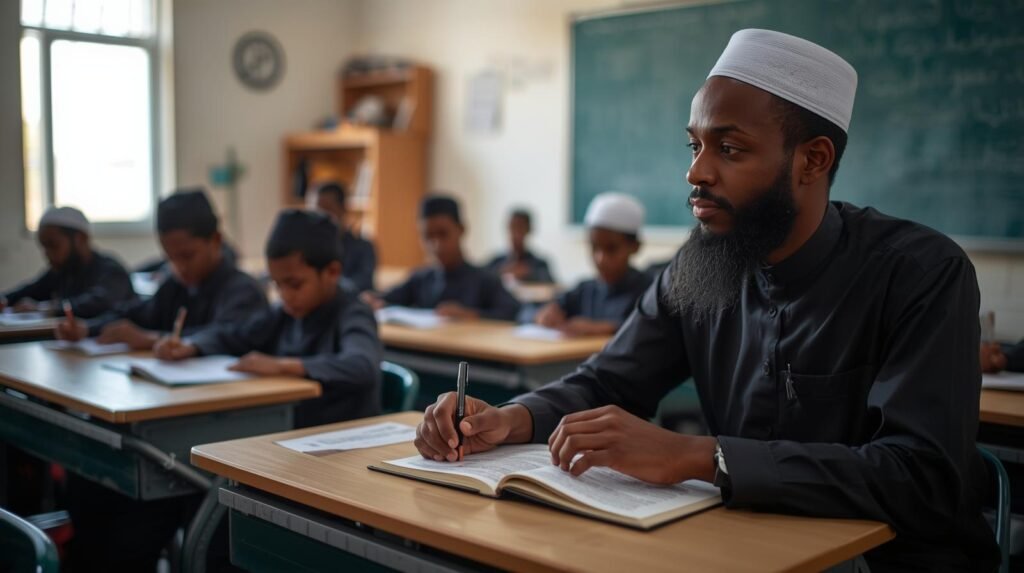
This course is based on Al-Qaai’da Al-Nooraaniya by Sheikh Noor Muhammad Haqqani. It helps beginners learn how to say Arabic letters the right way using a simple and trusted method. Al-Qaidah An-Nooraniah is very helpful for teaching children how to read the Qur’an correctly with Tajweed. If a child starts at age 4 and practices for just 15 minutes every day by age 5 they can read the Qur’an with Tajweed, inshallah. They can learn at their own pace and improve their Tajweed at home.
This course makes learning how to read the Qur’an easy. It has 17 simple lessons:
Single Letters
Learn each Arabic letter and how to say it.
Joined Letters
Learn how letters look and sound when they are joined together.
Separated Letters
Learn how letters look when they are not connected.
Letters with Vowels
Learn how to read letters with short sounds (a, i, u).
Letters with Tanween
Learn how to read double vowel sounds (an, in, un).
Practice on Vowels and Tanween
Practice reading using what you learned.
Small Alif, Yaa, and Waw
Learn these special small letters and how they are used.
Long and Soft Sounds
Learn how to stretch sounds (Madd) and soft sounds (Leen).
Practice on Tanween, Madd, and Leen
Practice using these rules while reading.
Sukoon (No Vowel)
Learn letters that have no vowel sound.
Practice on Sukoon
Practice reading letters with no vowel.
Shaddah (Double Letters)
Learn how to read letters that are doubled.
Practice on Shaddah
Practice reading strong, doubled letters.
Shaddah and Sukoon Together
Learn how to read when both rules come together.
Shaddah in Words
Practice using Shaddah in full words and sentences.
Shaddah, Sukoon, and Madd Together
Advanced practice combining all rules.
Full Review
Go over everything to read the Qur’an with confidence.